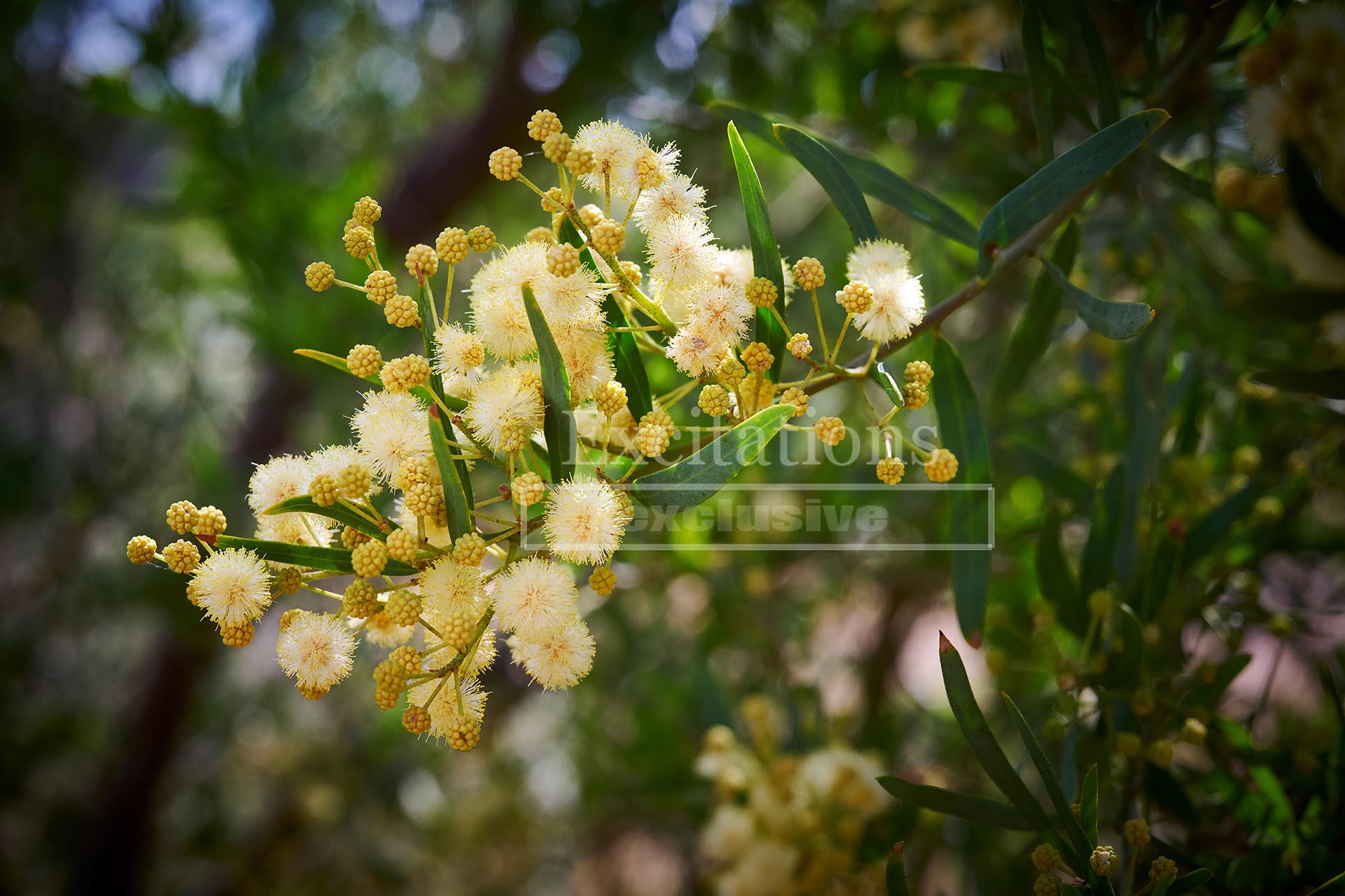
Gundabluie Wattle a Prickly Character

Location photograph of Acacia victoriae or Gundabluey wattle, flowers, closeup on tree with natural lighting. Real photo.

Gundabluie Wattle: A Prickly Character of Outback Australia

Some Australian plants put on a show you can spot from the highway. Others need you to pull up, stretch your legs and have a proper look. Acacia victoriae, commonly known as Gundabluie wattle, falls somewhere between the two.

Its fluffy, pale yellow to creamy-white flowers might look gentle enough, but the alternative name, bramble wattle, gives the game away. This is a bush with a few sharp opinions about being handled.
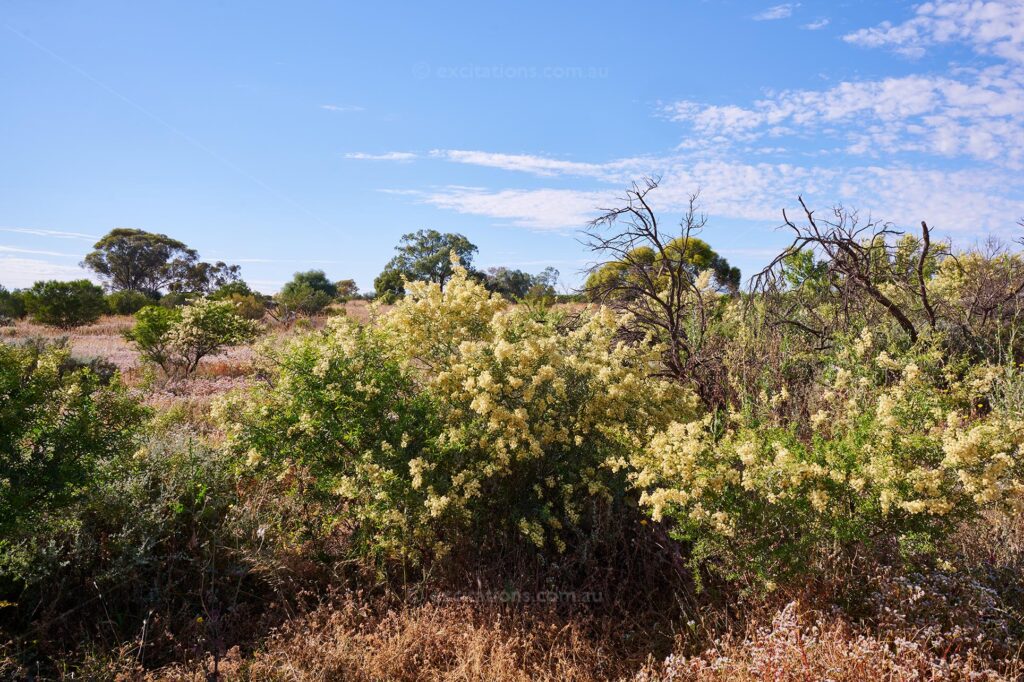
Landscape photo, early morning light, scrubland with multiple Acacia victoriae plants in full bloom.
Scrubland with Acacia victoriae, common name Prickly Wattle or Gundabluey Wattle in flower. This Acacia grows in all mainland Australian states and the NT.

A wattle that gets around

Despite the name victoriae, this native isn’t confined to Victoria. Gundabluie wattle occurs naturally in every mainland Australian state and the Northern Territory, making it a familiar character across a broad sweep of inland Australia.

You might encounter it around inland creek lines, on alluvial flats or among dry woodland and scrub. It’s one of those plants worth keeping an eye out for as the country changes beyond the windscreen.

Around our patch near Mildura, it’s a lovely reminder that you don’t need to head halfway across the continent to find something worth pointing a camera at. Sometimes the small flowering shrub beside your lunch stop deserves as much attention as the grand landscape further down the road.

Soft flowers, sharp edges

Gundabluie’s rounded flower heads make a softer display than the brilliant gold many of us associate with Australian wattles. Against green to grey-green foliage, they reward a closer look.

Just watch where you put your hands. Paired spines can occur along the branches, and leaning in for a photograph can quickly become a practical lesson in why it’s also called prickly wattle.

For the botanically curious, those narrow “leaves” are actually phyllodes: flattened leaf stalks doing the work of leaves. No need to remember the word to enjoy the plant, but it’s a handy bit of trivia for your travelling companions.
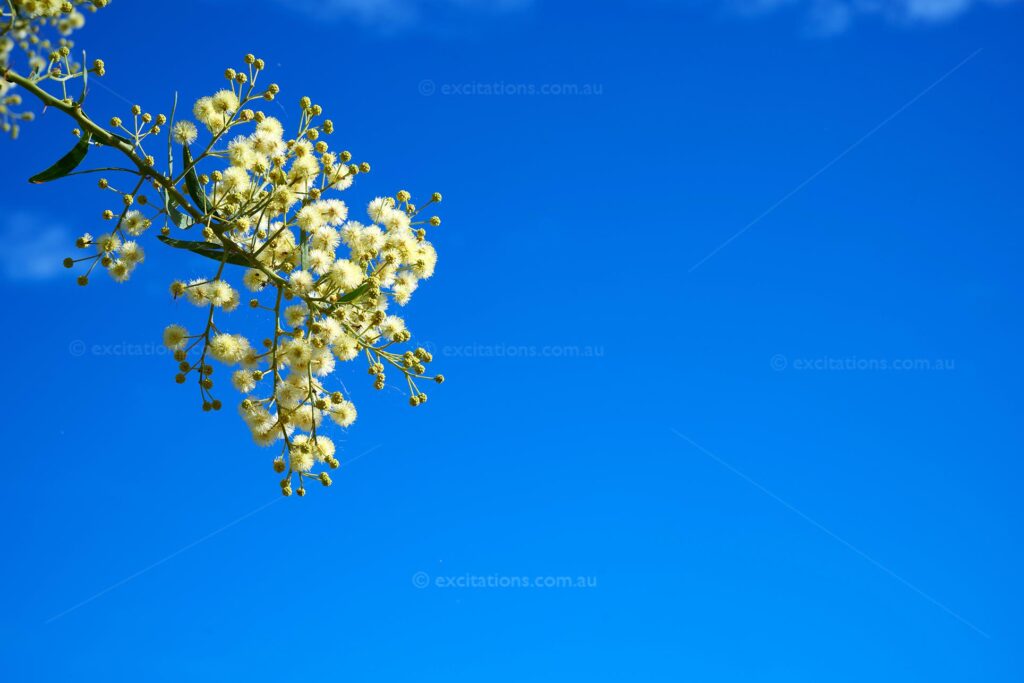
Acaciavictoria, Gundabluey wattle, photographed against a vivid blue sky. A lot of negative space for design purposes in printing or web applications.
A branch of the native Australian wildflower Acacia victoriae, photographed with a lot of blue sky in the background. Excellent image for overlaying text or as a wrap-around cover.

A few ideas for the camera

Start with the whole shrub in its surroundings. A wider photograph tells the story of where it grows; then you can move closer for the flowers, branching patterns and finer details.

For a simple flower portrait, try changing your position until there’s a quiet background behind the bloom. A small step sideways can remove a distracting bright patch or tangle of branches without touching the plant.

Soft morning or late-afternoon light is a good starting point. If the breeze keeps shifting the flowers, try a faster shutter speed—or take a breather and wait for a lull. The bush rarely works to our timetable.

And leave the branch where you found it. The next traveller might appreciate the same photograph.

Bring a little of the outback home

Whether you’re collecting photographs, identifying plants along the way or simply enjoying a roadside wander, Gundabluie wattle deserves a second look.

You’ll also find Australian native plants and outback photography in our image collection, available to purchase or license. Something to browse when the trip is over—or while you’re planning the next excuse to get away.

Swainsona formosa, stunning outback icon

Swainsona formosa or Sturt’s Desert Pea, outback icon.

If you travel through the outback of Australia during Spring and early Summer, chances are you will, during your journey see large areas of bright red flowers. The native flower responsible for these spectacular displays is Swainsona formosa. Mostly referred to as Sturt’s Desert Pea. However, I’m reliably informed that thousands of years before William Dampier collected plant specimens, the indigenous word for the plant was Ngooringa.

Swainsona formosa or Sturt's Desert Pea growing in a desert location, outback NSW, Australia.
Sturt’s Desert Pea flowers, a native of all mainland Australian states with the exception of Victoria. Floral Emblem of South Australia and the Northern Territory.


You need to be aware, that photographing the plant is OK. No surprises there, but collecting any part of the plant, from plants located on Crown land, is definitely not OK. To avoid a fine you will need a permit. Jumping through a fence, and nicking some from private property without written permission will also land you a fine.  It goes without saying, picking the flowers, making garlands from them, then creating awesome social media posts from your photos. Is not a great idea either. Both morally or legally.


Photograph of a small area of Australian native wildflowers carpeting the ground. Swainsona formosa
Swainsona formosa or more commonly known as Sturts Desert Pea, grows in arid and semi arid regions of all Australian main land states with the exception of Victoria. The flower is the Floral emblem of South Australia.


Sturt’s Desert Pea, like many other varieties of Australian native wildflowers, can best be described as being tough. I think the gardening community refer to this as being hardy. In good seasons, with plenty of rainfall, they thrive, covering large areas with their spectacular flora displays. If rainfall fails, or is significantly reduce, their presence and Vigour decline proportionally.

Tricks to survival

A number of tricks help these plants  survive harsh semi-arid environments. The most important adaptation, seeds that remain viable for years. Then, when the rains arrive again, germinating and bursting into life.

There is a lesson here for humans, venturing into the outback. We need to be resident, self sufficient and prepared. Living and travelling the outback, while being a wonderful experience can also be life-threatening for the under-prepared.

If you are looking for royalty-free stock images, any of the pictures of Ngooringa here, plus many others, can be licensed and dowloaded 24/7 from our stock photography archive

Or, just wanting to know a little about us and our outback photography blog, there is an intro here